The first part of Subterranea was developed during the residency offered by the Cluj Cultural Centre through the program Cluj în rezidență #3. The process culminated in a laboratory-style exhibition at Contemporar in November 2025.
The project was carried out with the support of the Cluj-Napoca City Hall and Local Council.

Subterranea is an ongoing autobiographical art project that explores the unseen landscapes of the mind, a series of personal excavations into trauma, addiction, healing, and identity. Through visual work, writing, sound, and shared reflections, Subterranea traces the emotional archaeology of survival and transformation. It is both a personal archive and a public offering: a space where vulnerability becomes material, and the invisible becomes visible.
Subterranea: Excavations from the Mind’s Collapse
– a manifesto –
this is not healing.
this is not redemption.
this is the digging.
subterranea is an act of excavation,
a descent into the wreckage of the psyche,
where memory rots, rage ferments, and the self fragments.
it begins in silence.
in absence.
in the long, shapeless void where creation once lived.
this work collects what was left behind:
fragments of what once lived,
traces of decay suspended in time,
remnants of structures that no longer hold,
vessels that hum with memories too heavy to carry.
each one is a relic of collapse,
each one, a map of what’s been lost or destroyed.
i am the subject.
i am the observer.
i am the one who buried these things,
and the one who now exhumes them.
subterranea is not a cure.
it is a confrontation.
a ritual.
a reckoning.
this is the shape of coming back,
one shard at a time.
For Subterranea I chose to work mainly with blue and grey. Grey has long been part of my visual language, a way to speak about the urban spaces I grew up in, the weight of concrete, and the memories embedded in those places. Blue, in this context, is not about optimism or melancholy, but about distance, depth, and the unknown. It becomes a space of suspension, where meaning doesn’t need to be fixed, just like the processes of memory and healing.
The Anatomy of an Inheritance
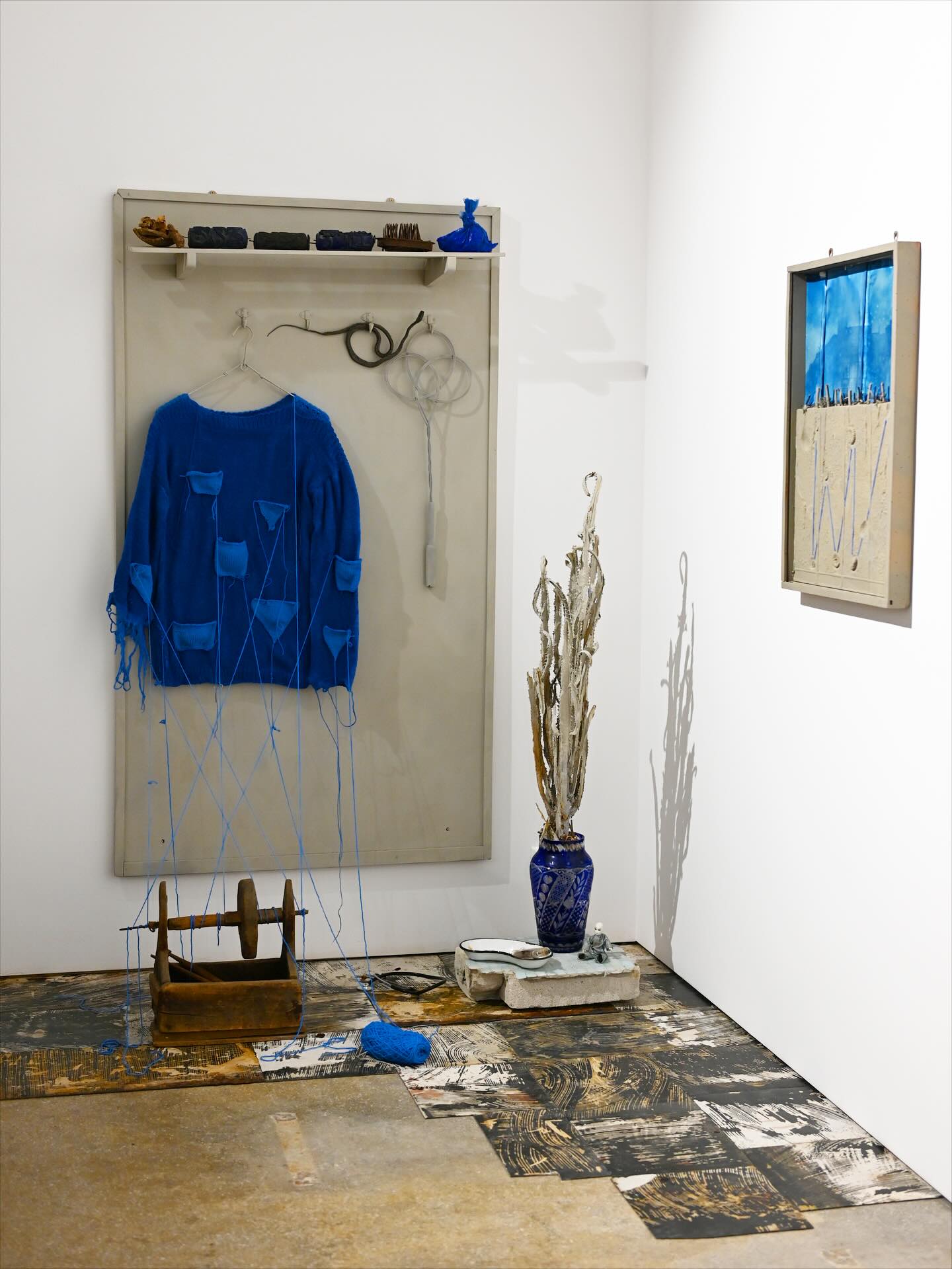
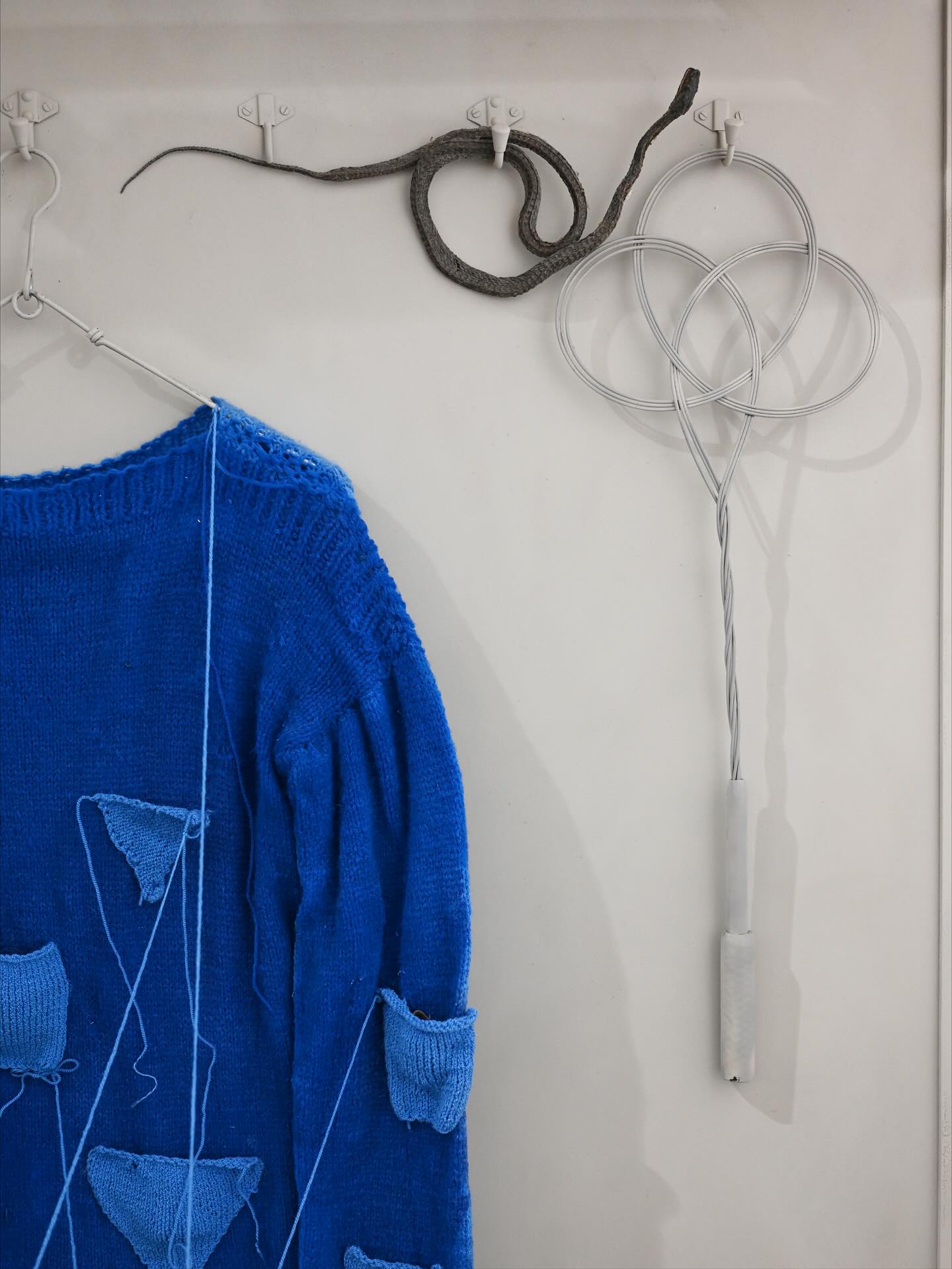
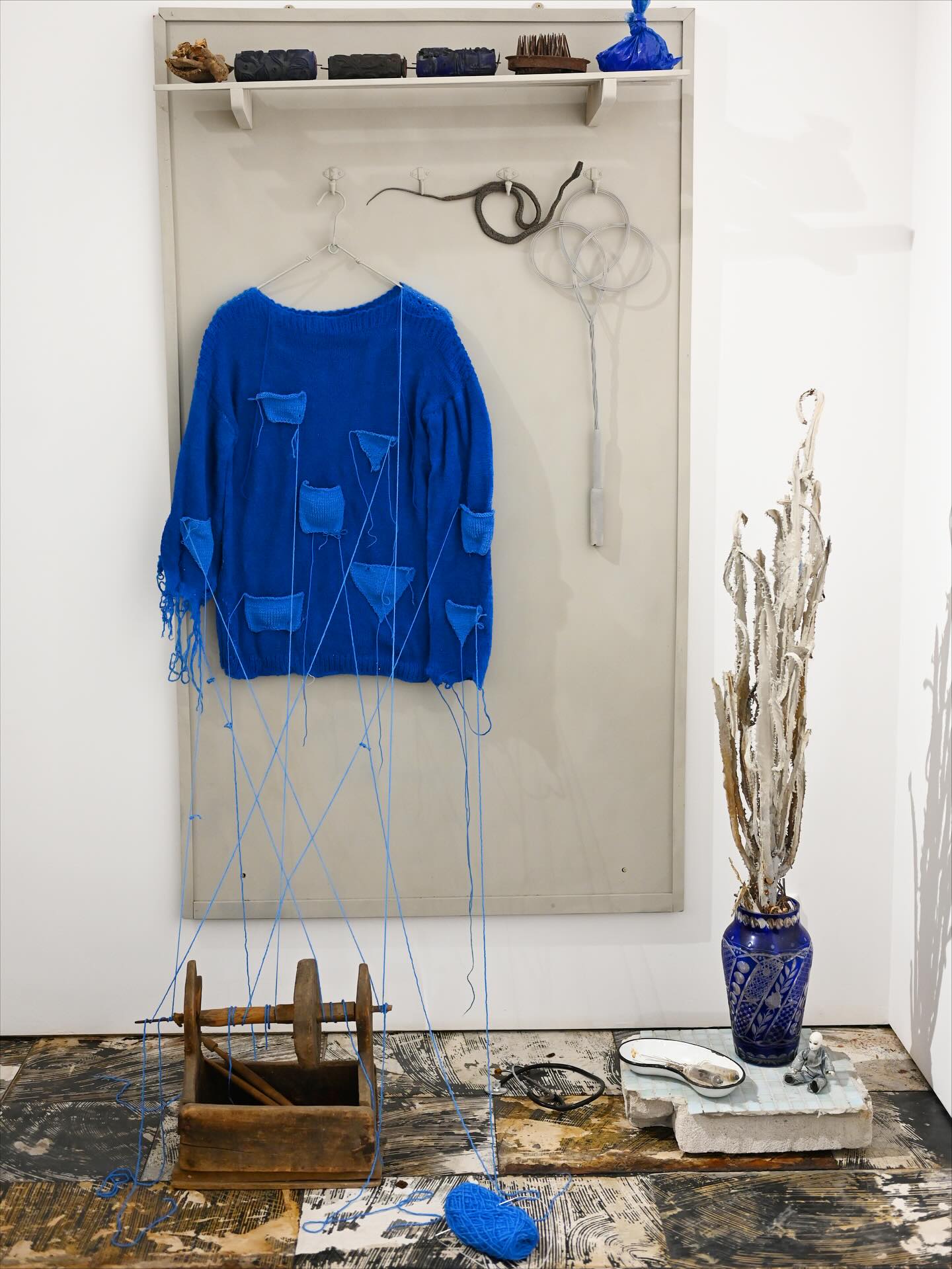
The work is part of the Subterranea universe, a study of inner layers and of memory revealed through objects. Its starting point is a wall-mounted coat rack, transformed into a support for identity and emotional inheritances. On it, a blue sweater crocheted by the mother begins to unravel, its threads leading toward an old spinning tool belonging to the grandmother, a fragile bridge between labor, care, and dissolution.
The color gray connects the piece to the visual language of Subterranea: a tone of memory, of the spaces between presence and absence. Around it, other objects become silent witnesses to this inner archaeology: relics of fear, of transformation, and of attempts to restore continuity.
The coat rack becomes an intimate map of the self, where fragments gather and unravel along with me. The work is a self-portrait through objects, a reflection on fragility, inheritance, and the slow process of healing.


Blueprint for Becoming
A found school biology chart from the abandoned school in Buru, over which I printed a cyanotype of a building from Turda.
The chart shows the stages of a larva’s transformation, a fragile map of becoming. On top of it, the building appears as another kind of structure, one that has shaped the landscapes of my memory.
53 x 73 cm

What Cracks, What Stays
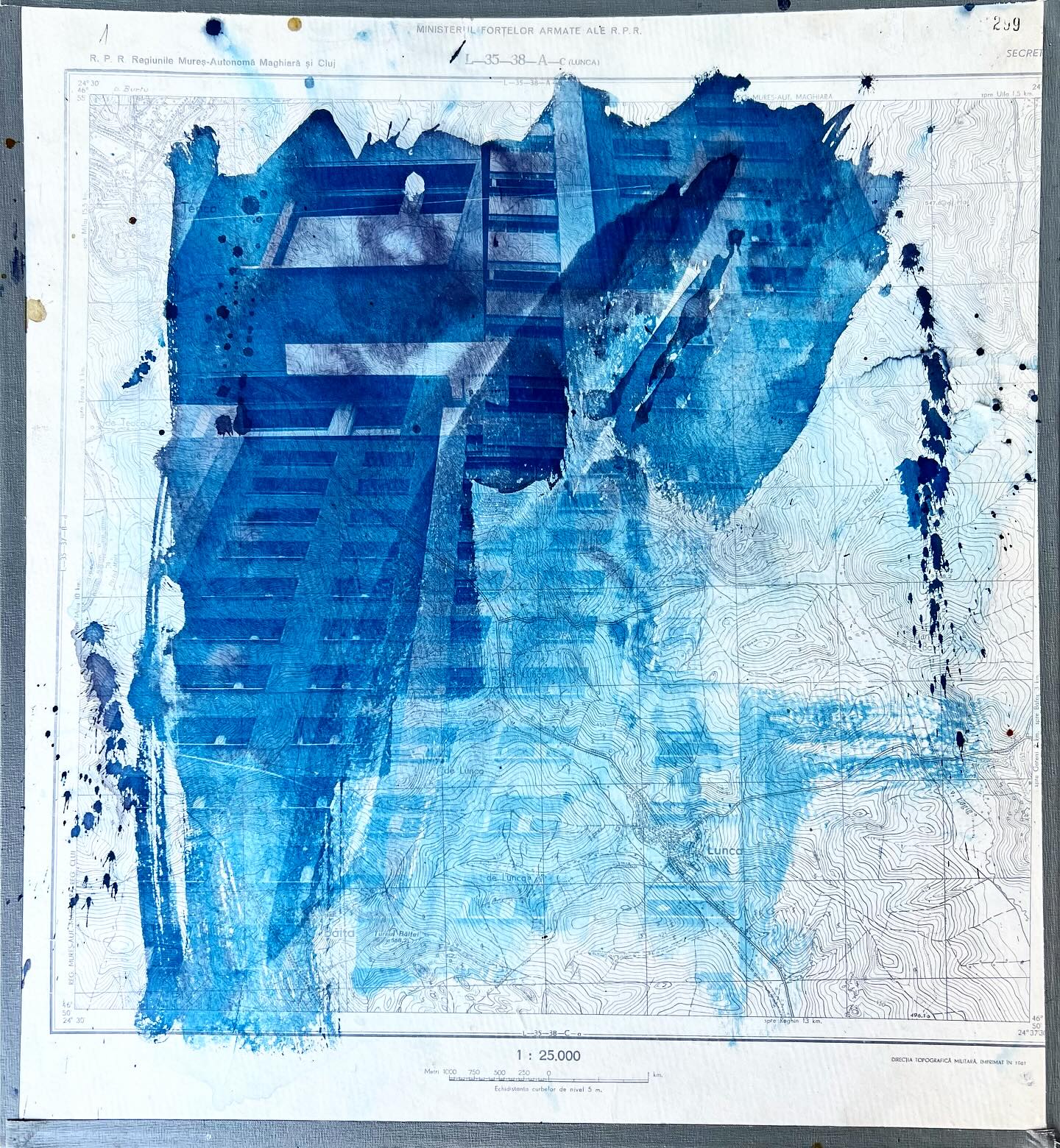
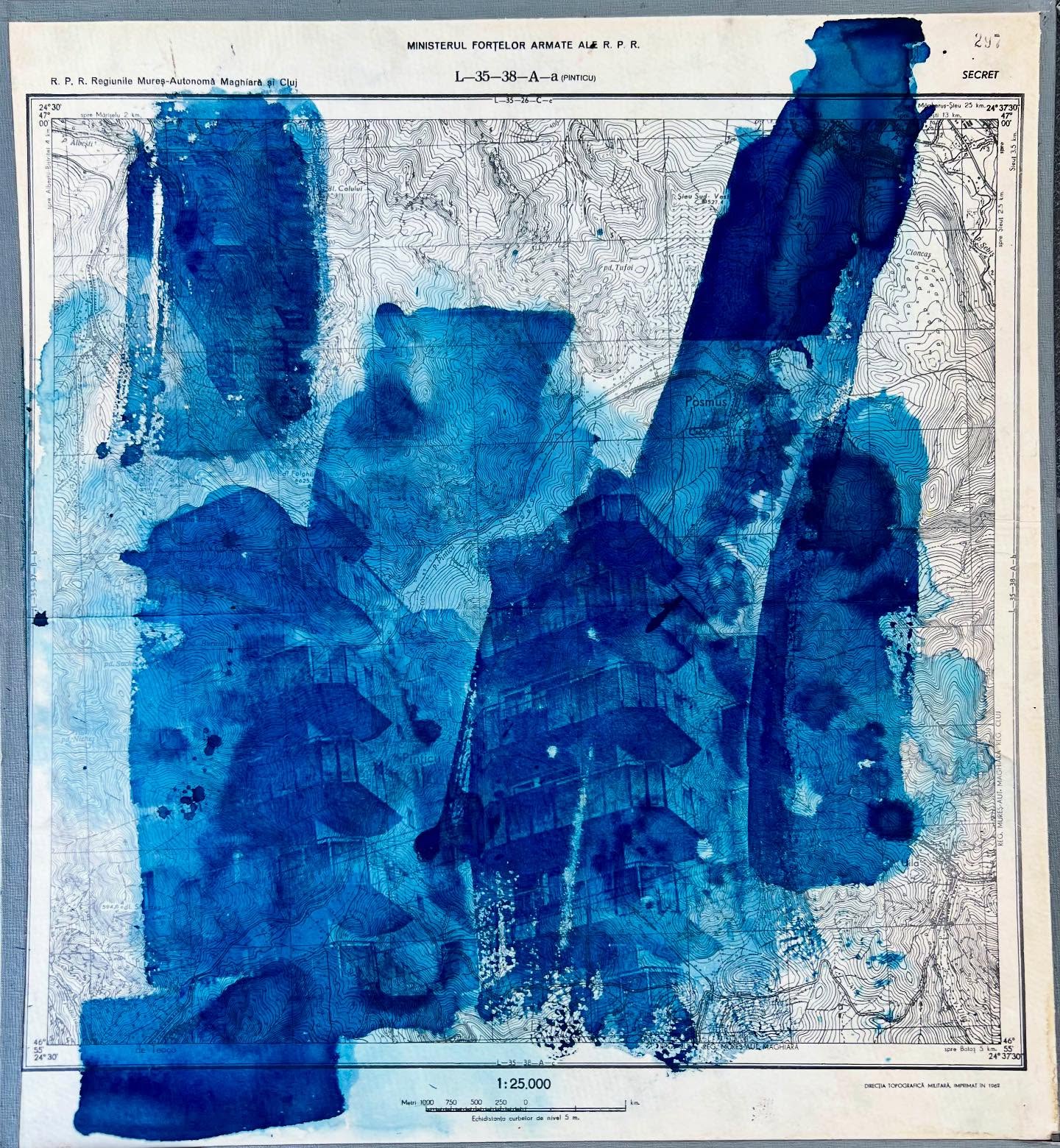
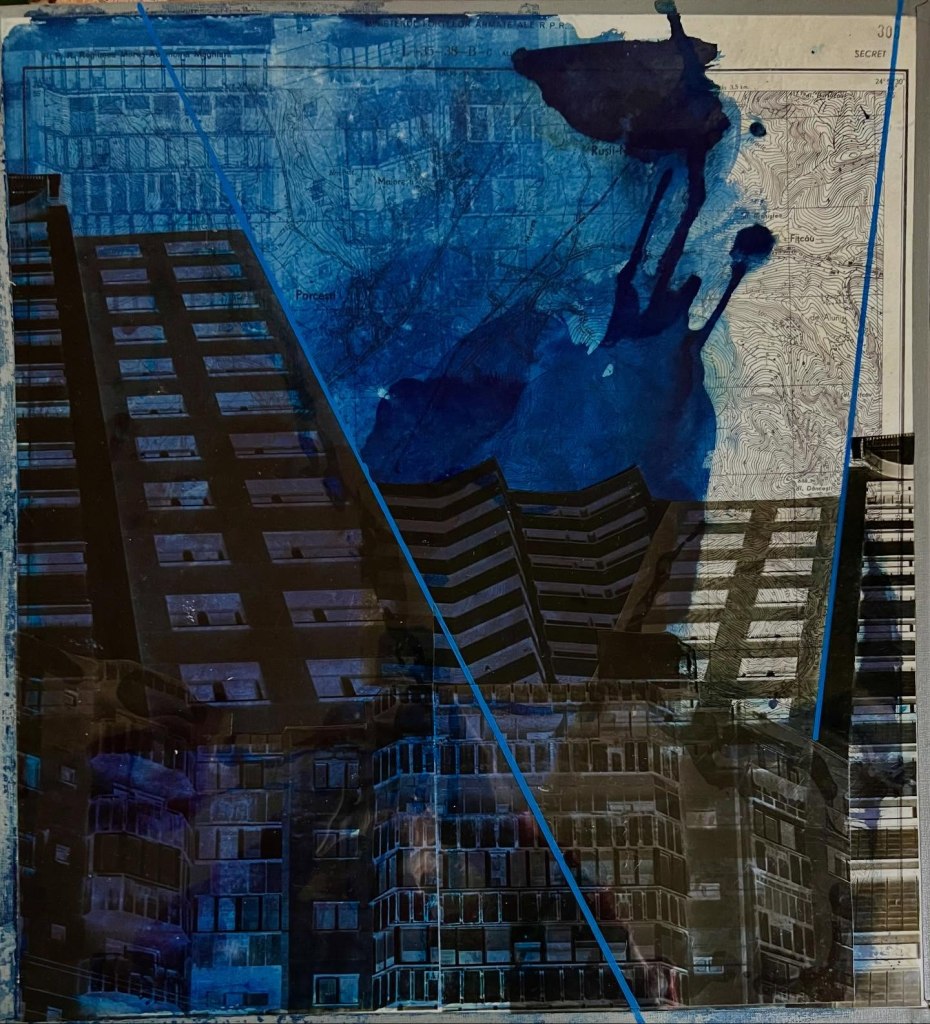
Part of Subterranea, these cyanotype prints are made on declassified military maps from the 1960s, the same decade when communist urban planning began to dominate the visual and emotional landscape of my hometown and many others.
The buildings I print are drawn from that architectural language: socialist-modernist, brutal, pragmatic. They were meant to represent progress, control, stability, but for me, they carry another kind of memory. A colder one. One that shaped how I learned to see space, distance, and belonging.
Printing these images on maps once used for surveillance and control creates a dialogue between two systems of order — the political and the emotional. The military map becomes a surface of introspection; a landscape no longer about strategy, but about fragility and the traces we carry.
In Subterranea, I look for ways to make these layers visible — the overlap between public history and private feeling, between what was built and what was broken. These works are not about nostalgia or architecture itself, but about how structures, both physical and internal, leave marks that we spend a lifetime learning to read.


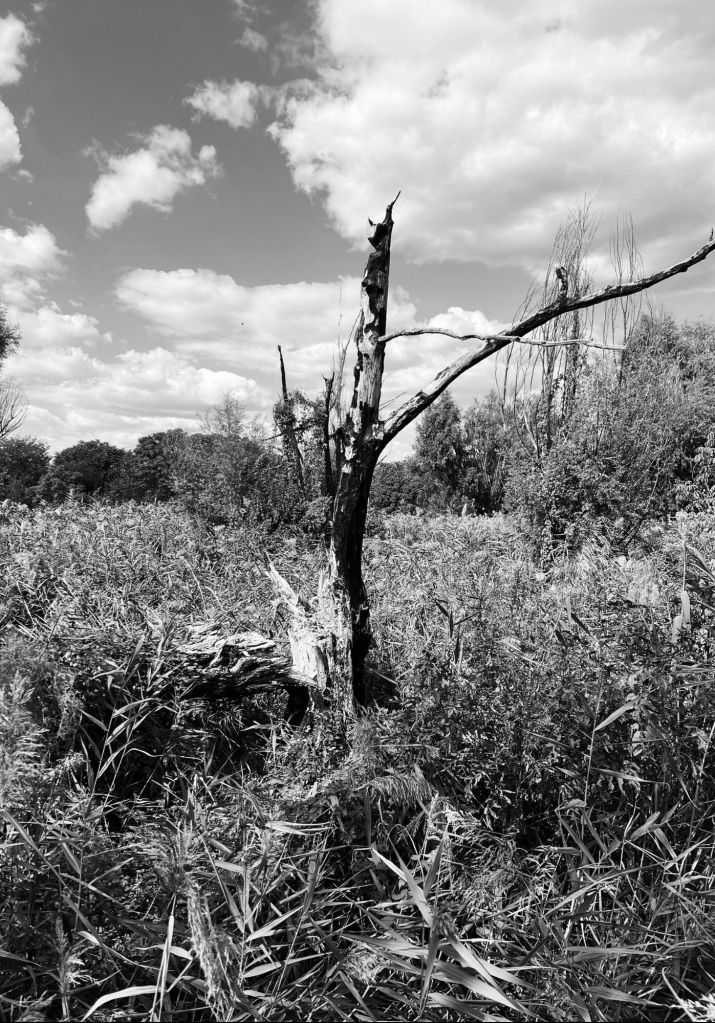
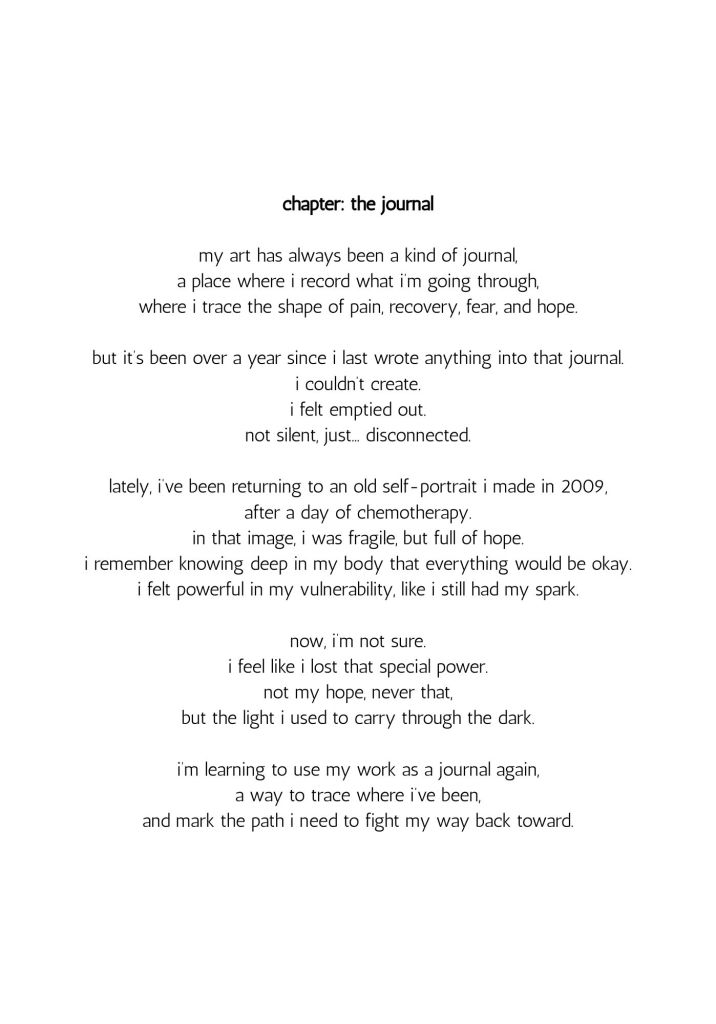
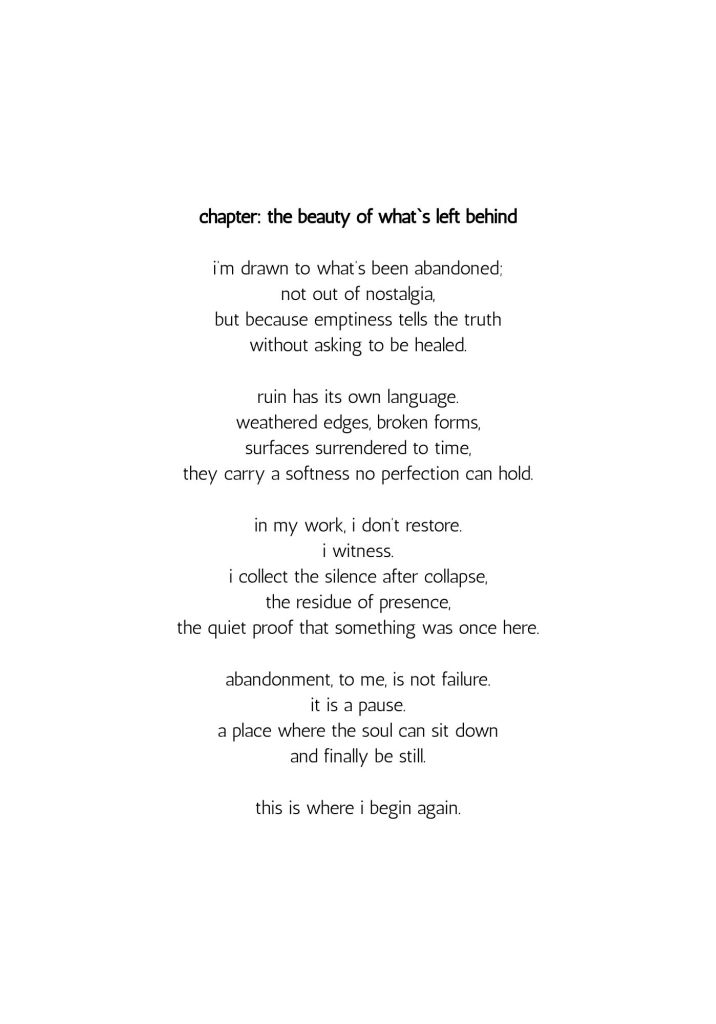
Zine – subterranea
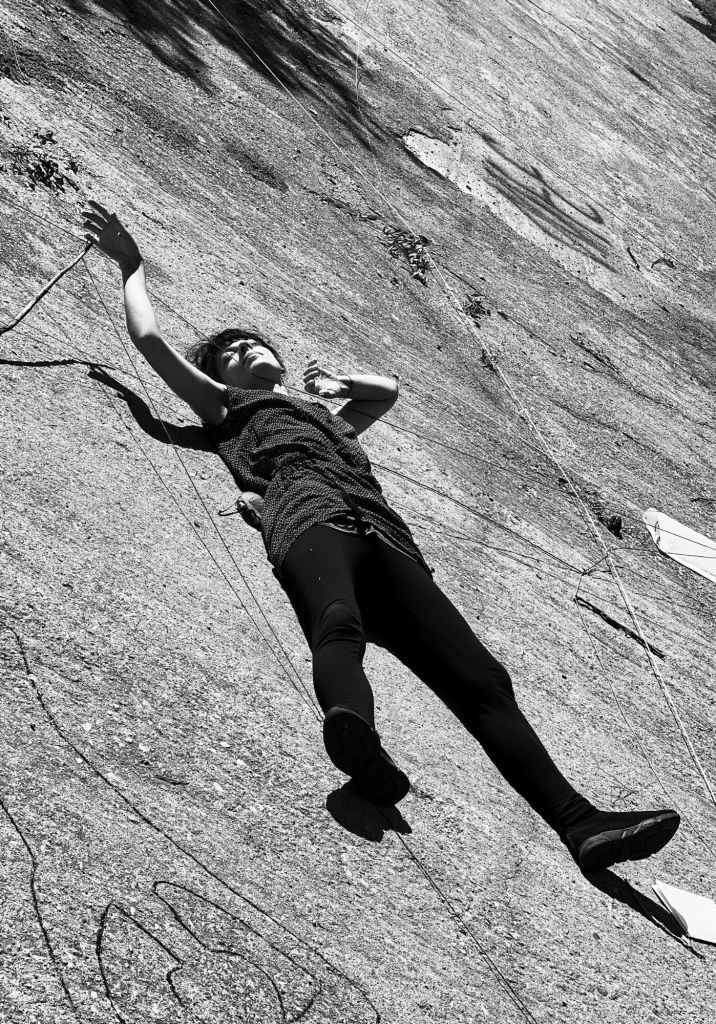
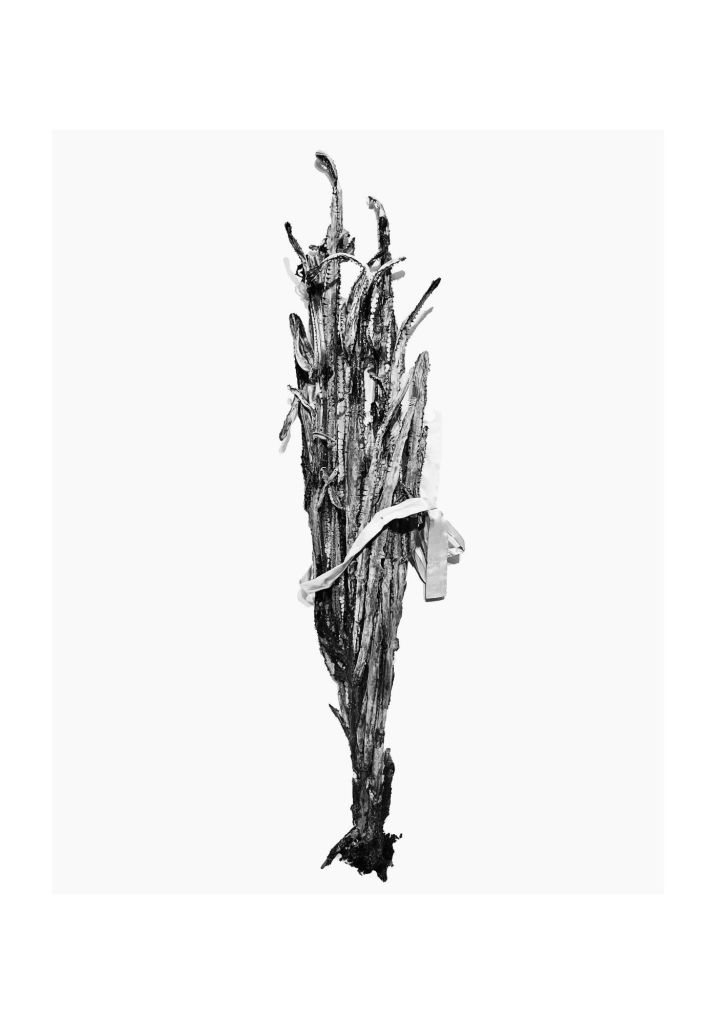
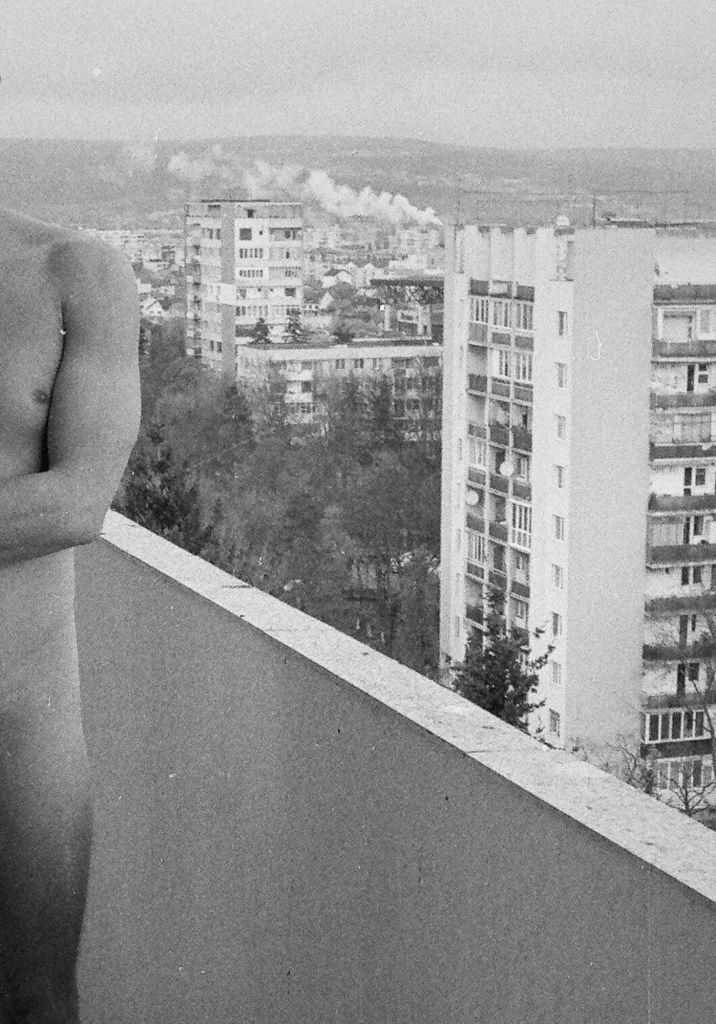
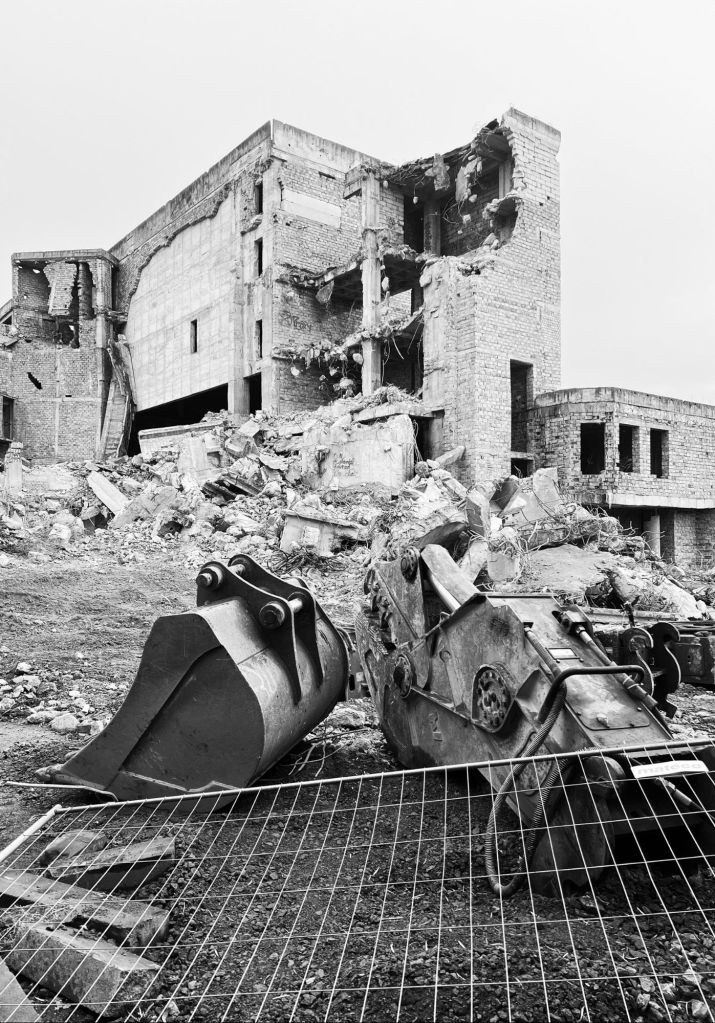
Subterranea is an ongoing autobiographical project exploring life through and after collapse, trauma, addiction, healing, and the slow work of rebuilding.
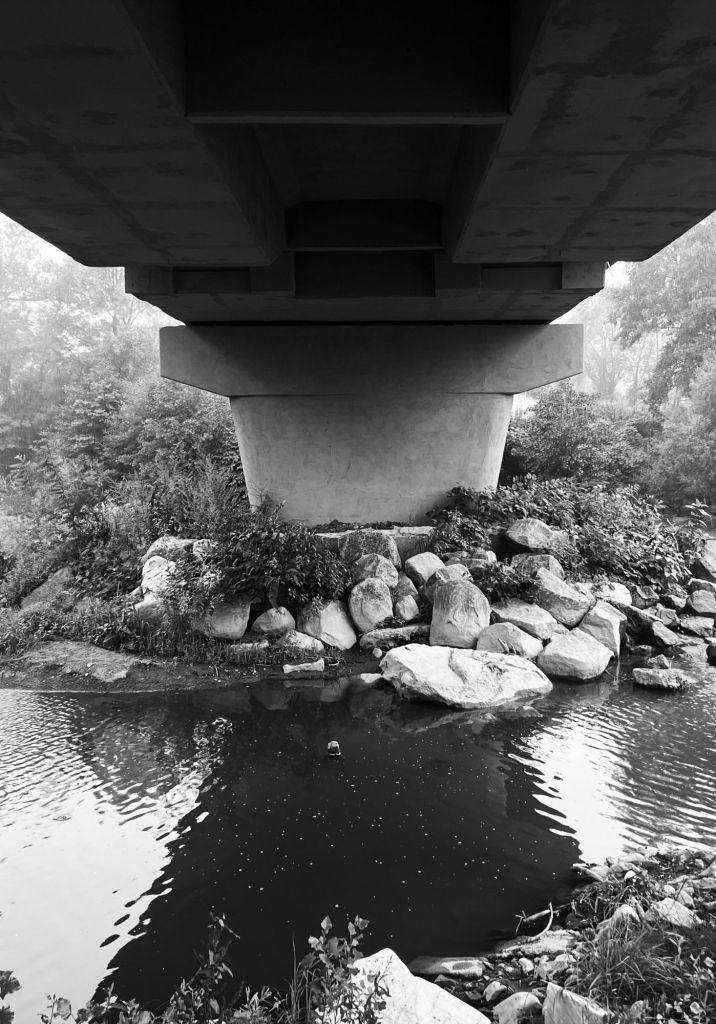
Through text and photography, it gathers fragments of memory and quiet recovery.
Unfolding in nonlinear chapters, it invites vulnerability to surface as connection, honesty, and a quiet act of resistance.











Blueprints for Becoming
A cyanotype of Turda’s unfinished House of Culture, a building started under communism and left incomplete after its fall. Beneath it, a fragment of floor from a restored building. One carries the weight of what was never finished; the other, the trace of what was rebuilt. Together, they mirror the layers of Subterranea, the parts of ourselves left suspended between collapse and repair, between what we bury and what we learn to rebuild.
50 x 30 cm

A cyanotype of the place where, in the ’90s and 2000s, we bought clothes, cheap fakes brought from Turkey, worn with pride or necessity. Beneath it, a fragment of floor from a restored building. These layers speak about imitation, aspiration, and the quiet economy of survival after collapse. The fake became real because it was what we had.
In Subterranea, it’s another kind of memory, a reminder of how identity, like architecture, is often built from what’s available, not from what’s ideal.
61 x 57 cm

Two cyanotypes — one of a typical communist block like the one I grew up in, the other of a crane, frozen mid-construction. Beneath them, a fragment of floor from a restored building.
The block stands for what was fixed, repetitive, imposed. The crane, for what was always promised, never quite finished. Together, they hold the tension between structure and change, between what shaped me and what I keep rebuilding within myself. In Subterranea, they become part of the same story, the architecture of survival, the machinery of becoming.
44 x 30 cm

Cartographies of Error
Some of the cyanotypes printed on declassified military maps didn’t develop as expected. Instead of discarding the failed prints, I chose to keep and transform them. Using the negatives of the original photographs, I began rebuilding the images as collages directly onto the damaged maps.
These works sit between error and intention: the maps still hold their old logic of control, while the negatives open a new space for fragmentation, repair, and reinterpretation.
50 x 50 cm

 LIVIU BULEA